Cloud computing delivers IT resources over the internet, from storage to processing power. Businesses access these on demand, paying only for usage. This setup suits operations in Worcester, MA. and surrounding areas like West Boylston, Holden and Grafton, where flexibility supports local firms handling variable workloads.
Key traits include remote access for teams working anywhere with internet. Providers manage hardware, freeing companies from both physical upkeep and software patching. For small and medium businesses (SMB) in Massachusetts, this means quick adaptation to growth without large upfront investments.
On-Premise Computing Fundamentals
On-premise keeps servers, storage, and networks in-house. Organizations own and operate everything, providing direct oversight. Law firms and healthcare providers in West Boylston, MA for example, rely on this model for the high-speed data access essential to New England’s professional services.
Initial setup costs more, with ongoing maintenance by internal or contracted teams. Yet it allows precise customization to match workflows, avoiding internet delays for high-speed tasks.
Benefits of Cloud Adoption
Cloud stands out for dynamic environments:
- Scalability: Adjust resources instantly for peaks, like seasonal demands in Massachusetts retail.
- Automatic Updates: Providers patch software, reducing breach risks from outdated systems—vital as threats evolve rapidly.
- Cost Efficiency: Shift to pay-as-you-go, cutting hardware and facility expenses. Capital redirects to core operations.
Remote work thrives here, with employees in Worcester or beyond connecting seamlessly. Performance improves via optimized provider infrastructure.
Strengths in On-Premise Deployments
On-premise excels where control matters:
- Full Authority: Customize setups for unique needs, scheduling maintenance to avoid disruptions.
- Physical Security: On-site servers allow for “lock-and-key” protocols and hardware-level isolation. This approach is ideal for regulated sectors like healthcare and finance in MA that prefer to maintain a tangible perimeter around their most sensitive data
- Low Latency Performance: Real-time processing without internet dependency, perfect for transaction-heavy New England businesses.
For over 20 years, our local IT pros in Worcester have seen on-premise evolve from hosting email servers to secure, compliant hubs.
Hybrid IT: Balanced Infrastructure
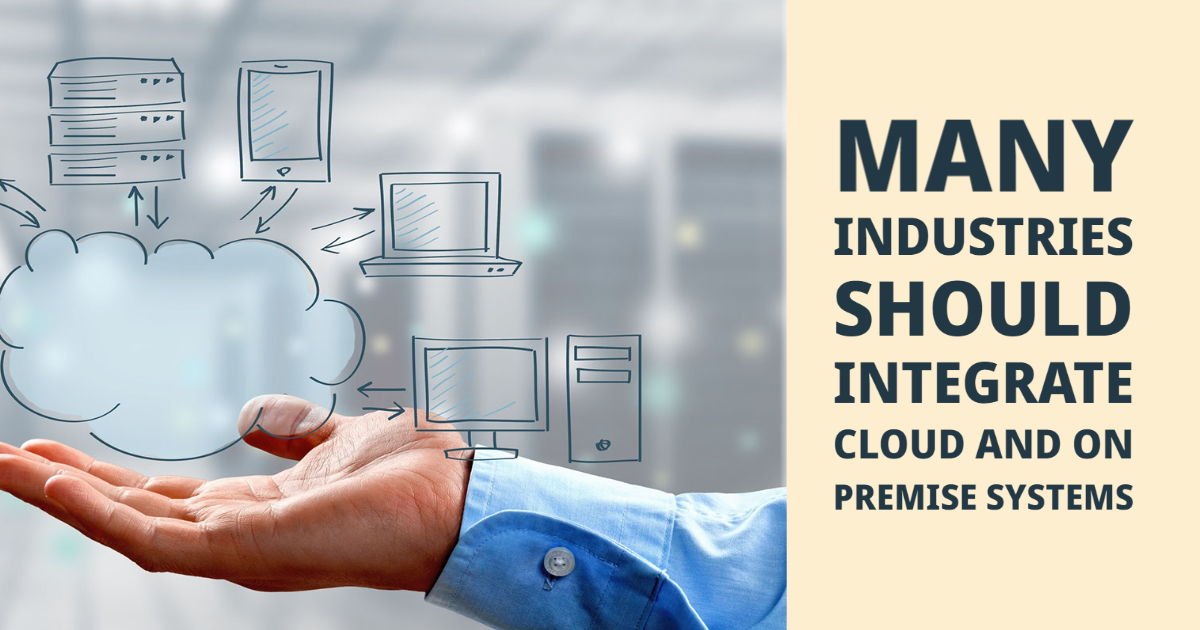
Hybrid blends cloud scalability with on-premise control. Sensitive data stays local for compliance, while routine tasks shift to cloud for efficiency. This tailored mix minimizes downtime, boosts productivity, and saves costs—proven for CS2 clients since early adaptations.
In Massachusetts, hybrid supports SMBs scaling amid economic shifts, keeping vital apps on-site and leveraging cloud for mobility.
Planning involves workload assessment:
- Route collaborative workflows to cloud.
- Retain high-security needs on-premise.
- Ensure seamless integration for unified access.
Comparing Key Decision Factors
Choose based on priorities:
Factor-Cloud-On-Premise-Hybrid
| Budget | Pay-as-you-go, low entry | High upfront, steady maintenance | Balanced, optimized spend |
| Scalability | Instant expansion | Requires hardware investment | Flexible per workload |
| Security | Provider-managed updates | Custom, physical control | Layered for compliance |
| Performance | Internet-dependent | Direct, low latency | Best of both |
In Shrewsbury, MA and surrounding areas, firms weigh data sensitivity against growth plans.
Pros and Cons Breakdown
- Cloud Pros:
- Rapid scaling for fluctuating needs.
- No hardware ownership.
- Built-in redundancy cuts downtime.
- Cloud Cons:
- Internet reliance risks latency.
- Less direct configuration control.
- On-Premise Pros:
- Tailored security layers.
- Predictable performance.
- Full data possession.
- On-Premise Cons:
- Capital-intensive startup.
- Manual update burdens.
- Hybrid Pros:
- Cost-effective flexibility.
- Meets diverse regulations.
- Enhanced uptime via distribution.
Hybrid often wins for long-term resilience in competitive Massachusetts markets.
Real-World Applications in Massachusetts
Local examples abound. A Worcester law firm uses on-premise for client files & cloud for collaboration tools. Medical practices in Westborough keep patient records secure on-site, scaling admin via cloud. Since 2003, area providers at CS2 have guided these shifts, from full on-premise to hybrids saving money while lifting output.
Contact Us for Your IT Assessment
Reach out today to discuss a customized cloud, on-premise, or hybrid strategy for your Massachusetts and Worcester County operations.